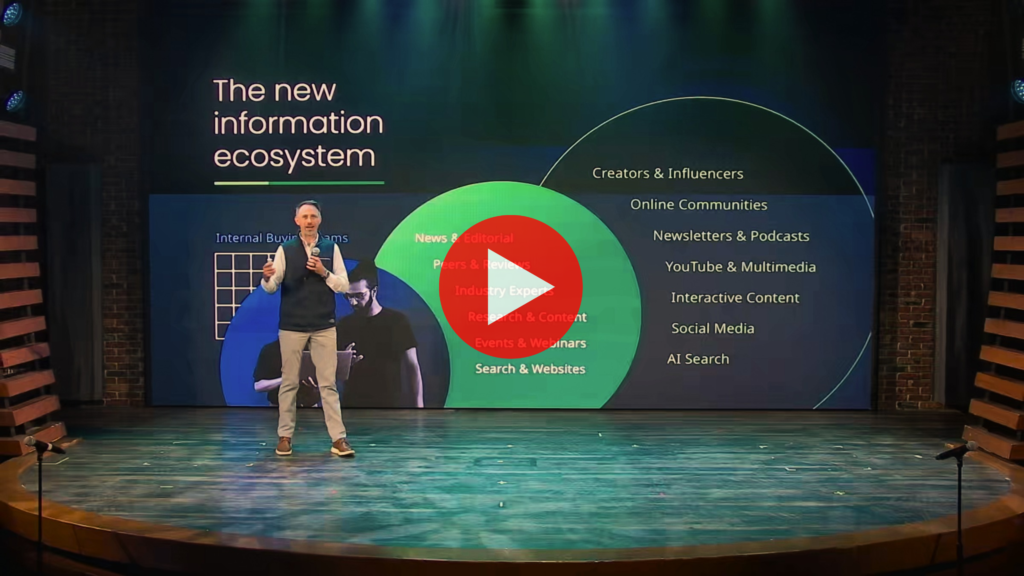
The B2B buying journey has changed forever, and marketers are rethinking how to catch up, keep up, and maybe even get one step ahead of their target buyers as well as their competition.
That was the key focus at the 2026 Music City Demand Gen Summit (MCDGS), where TechnologyAdvice brought together 50 B2B tech marketing leaders to discuss the challenges and opportunities shaping their 2027 strategies.
From our keynote session diving into the New Information Ecosystem for B2B Buyers to our lively panel discussions and Nashville Hot Chicken Chats, these marketers didn’t hold back in sharing how their priorities are shifting and what metrics they care most about in the year ahead.
Top trends shaping strategy shifts
While new technologies and richer audience insights are enabling marketers to tackle old problems in new ways, one key driver has come to the forefront as the agent of change for B2B marketing in 2027: the new buying journey.
Today’s buyers don’t rely on just one source to research solutions and discover new vendors. And in most cases, it’s not just four or five sources either. Modern buyers might read industry newsletters, listen to related podcasts, dive into online reviews, ask AI for recommendations, and watch videos from their favorite creator before ever visiting a vendor’s website.
The new information ecosystem is changing how B2B marketers need to reach buyers.
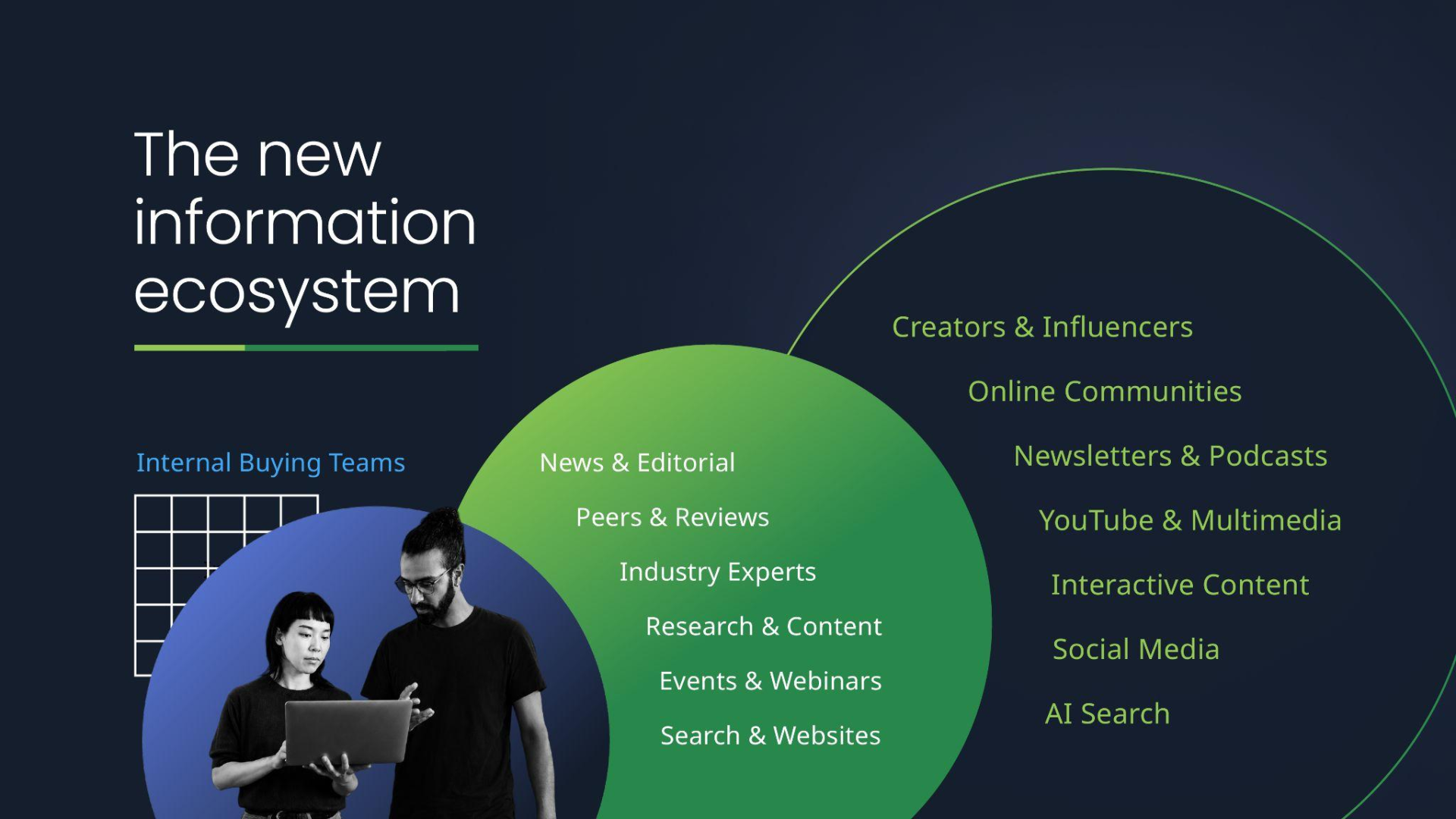
Meanwhile, technology buyers are creating vendor shortlists earlier than ever, with greater influence coming from new media content (social / newsletters / creators / etc.), AI-generated answers, online communities, and recommendations from trusted experts and influencers. This creates a new dynamic where visibility, influence, and authority with both buyers and bots play a larger role in creating early stage brand preference, and in turn, downstream demand.
For marketing teams, that means thinking beyond traffic, leads, and campaign performance. And it means asking some tough questions, like:
- Where are buyers and LLMs discovering our brand – and our competitors?
- Which sources do they trust and rely on when looking for recommendations?
- Are they hearing a consistent and accurate message across channels and throughout their journey?
- Are we creating the influence and authority needed to get on shortlists before they raise their hand?
These trends and questions shaped the conversations at MCDGS, where four major shifts stood out as foundational pillars for 2027 planning.
1. Brand authority and demand gen need to work together
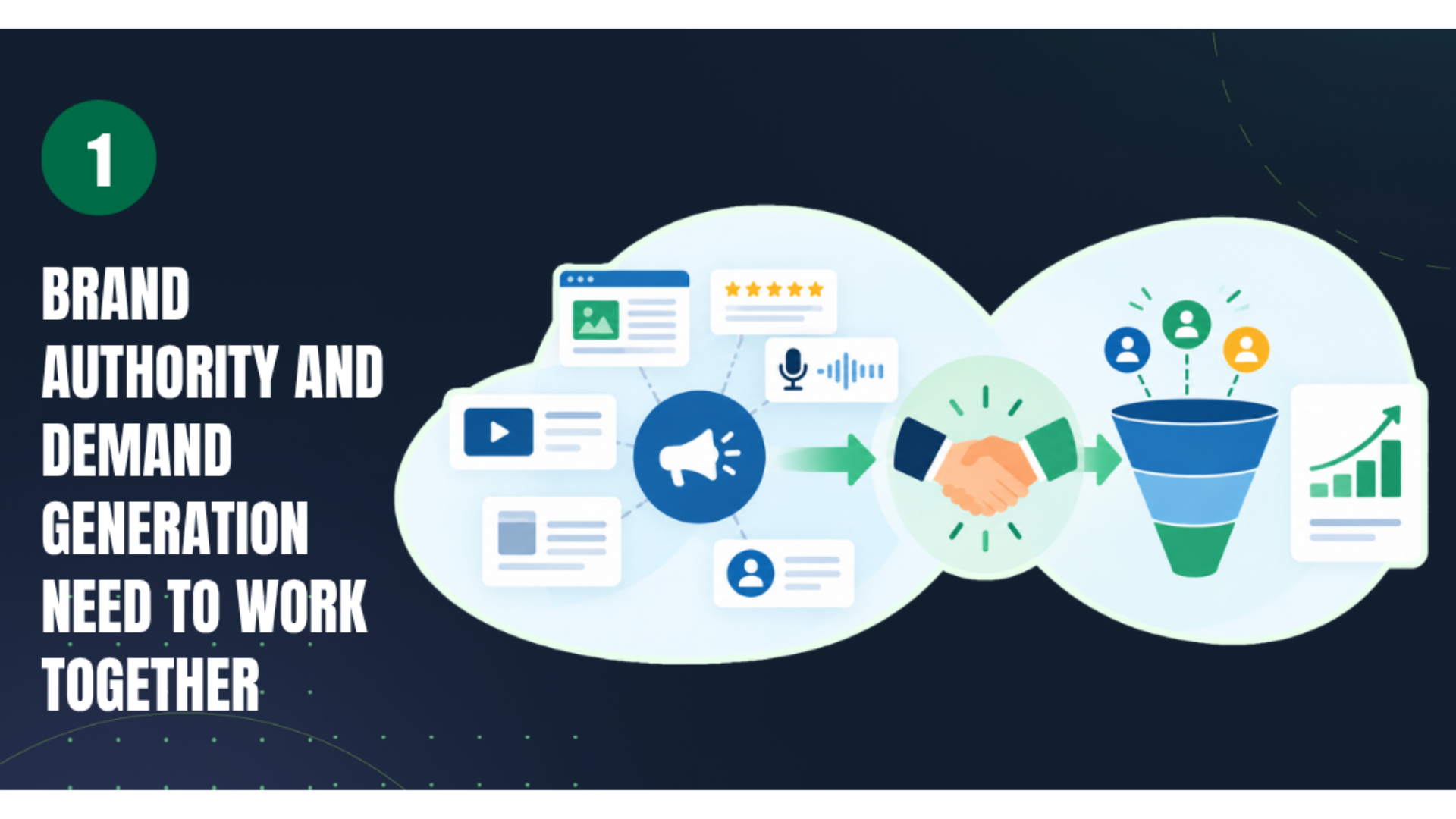
Demand generation has traditionally emphasized measurable actions such as clicks, form submissions, leads, and pipeline.
Those metrics still matter. But they don’t capture every interaction that influences a decision, and they certainly don’t represent all of the areas where demand gen teams need to invest.
A buyer might discover your brand or solution through an independent article, hear an expert discuss a challenge on a podcast, or encounter your perspective in a newsletter. Or your brand may (or may not!) be mentioned when they ask AI for a list of the top five vendors worth considering for their next big purchase. They may not act immediately, but those experiences shape how they evaluate brands and which ones even get a shot at competing for their business.
As one marketer put it, “I feel like my job as a demand gen leader is shifting and expanding every day. It’s no longer just about bringing leads in the door and nurturing them in email drips – it’s about reaching potential buyers across digital, social, search, LLMs, newsletters, media, and other channels to ensure our products are top-of-mind when they’re ready to download a guide, register for a webinar, or book a meeting with Sales.”
Brand building and demand generation shouldn’t compete for attention or budget. A recognizable, trusted brand makes demand gen more effective by giving buyers a reason to engage when they’re ready.
Build credibility before asking for a conversion
Buyers don’t always want to fill out a form the first time they encounter a company. They may still be trying to understand the problem, compare approaches, or decide which sources deserve their trust.
Educational content, independent perspectives, expert contributions, and credible media placements can build familiarity before buyers are ready for a sales conversation. But appearing in more places isn’t enough, buyers also need a reason to remember you.
Generic claims about innovation, efficiency, or being an AI-powered platform rarely explain what makes one vendor different. Stronger messaging addresses a specific problem, offers a useful perspective, and makes the company’s expertise clear.
Connect authority to demand outcomes
Brand-building programs can be difficult to evaluate through immediate conversions alone. Instead of expecting every placement to produce a directly attributable lead, consider how it supports broader goals.
Useful indicators include target-account engagement, branded search, direct traffic, qualified audience engagement, and pipeline acceleration. No single metric proves that authority caused a sale, but several signals can help show whether those investments are supporting awareness and demand.
The goal is to treat brand authority as part of demand generation, not a separate initiative. Invest in credible content and trusted channels, then look at how those efforts contribute to buyer engagement and commercial outcomes.
Looking for inspiration? Explore six real-world B2B campaigns that combine creative ideas with credible storytelling and stand-out execution in the Scroll-Stopping B2B Marketing Guide.
2. The buyer journey now spans a wider information ecosystem
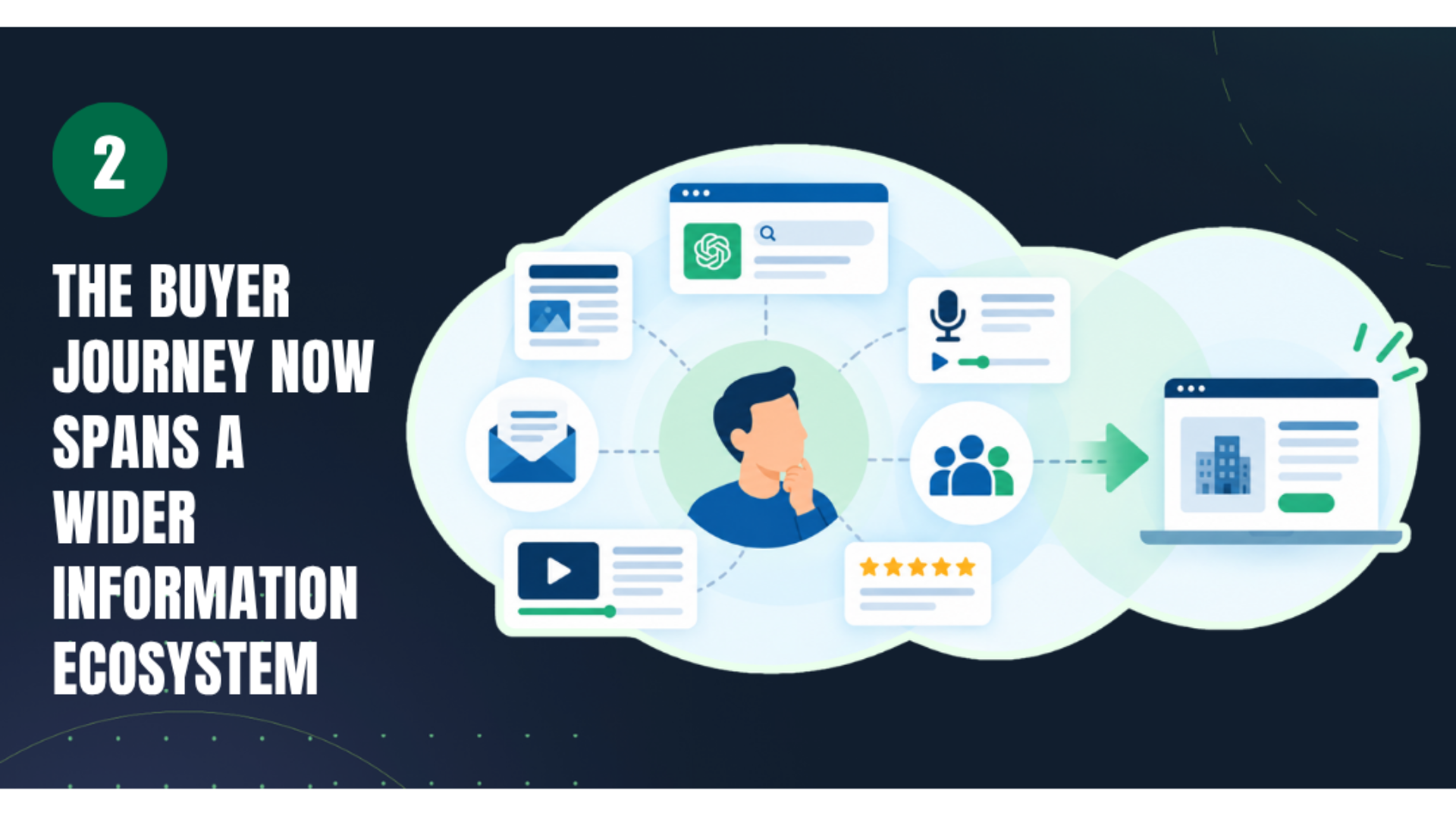
Search engines and vendor websites are still part of the buying process. But they’re now surrounded by other sources of influence. Lots of them.
AI assistants, industry publications, newsletters, podcasts, creators, professional communities, and subject-matter experts can all shape how buyers understand a problem and evaluate potential solutions.
The challenge isn’t simply managing more channels. It’s knowing which sources matter to your audience and what role each one plays.
Influence isn’t always tied to audience size
Reaching a large audience can grow awareness, but reach alone doesn’t guarantee relevance.
A specialized newsletter reaching engaged IT decision-makers may be more valuable to a cybersecurity vendor than a broad publication reaching millions of people with little interest in enterprise security. The same applies to podcasts, creators, experts, and communities. What matters is whether the source reaches the right people, has credibility, and fits the role you need it to play.
A publisher might introduce buyers to a category. An independent expert could help them understand a complex challenge. Product reviews may become more important when they’re comparing vendors.
When discussing the opportunities related to new media channels, one marketer shared that “Newsletter sponsorships have become one of our top performing channels for driving high quality net-new leads and related pipeline. We’ve seen a lot of success promoting our webinars, research reports, and buying guides, and sometimes the most niche and specific newsletter audiences are the ones that perform the best.”
Build a connected presence across trusted sources
Trying to appear everywhere can spread resources too thin. Start by understanding where your buying group learns, researches, and evaluates technology.
Map the questions buyers ask, the sources they consult, and the information they need at each stage. Then prioritize channels that offer the strongest combination of audience relevance, credibility, influence, and strategic fit.
Your message should remain recognizable even when the format changes. An expert interview, newsletter sponsorship, educational article, and AI-generated brand description shouldn’t sound like they’re describing four different companies.
As you plan for 2027, focus on building a connected presence across the sources your buying group already trusts, with consistent and differentiated messaging. Adding more channels won’t necessarily create more influence if those channels aren’t reaching the right people with the right message.
3. AI visibility is becoming a demand generation priority
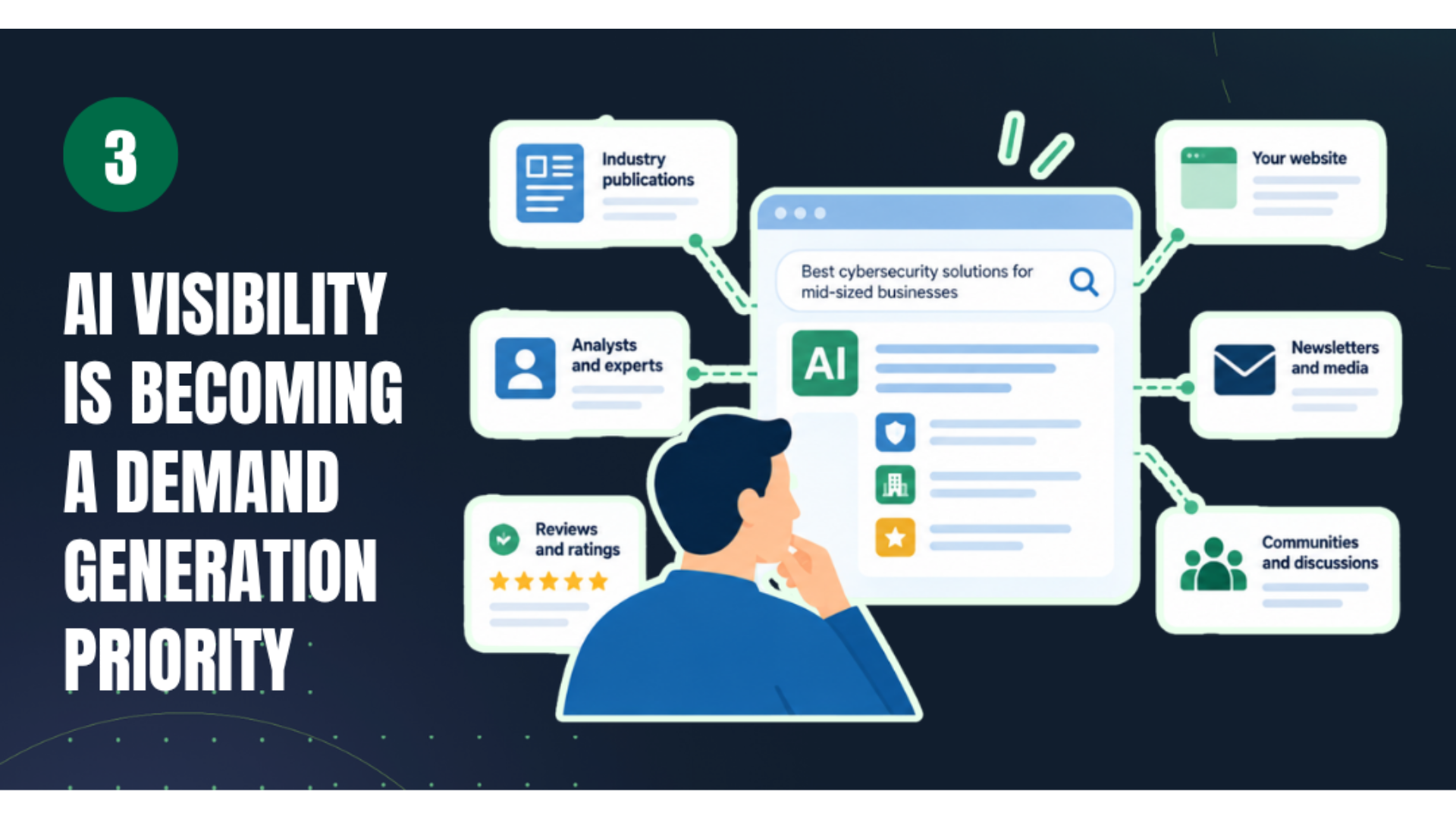
AI-powered search is changing how buyers discover technology solutions, and its impact extends well beyond traditional SEO.
Buyers can ask AI assistants to explain unfamiliar categories, compare vendors, evaluate different approaches, and recommend solutions for specific business needs. Those interactions may shape which companies buyers consider, often before they even visit a vendor’s website.
TechnologyAdvice’s research on AI search throughout the B2B buying journey offers a useful perspective. Its analysis of more than 60 million AI citation instances found that 36% were associated with middle- and bottom-of-funnel technology queries, including product recommendations, vendor comparisons, and questions about specific solutions.
While the research measures AI citations rather than individual buyer behavior, it reinforces an important point: AI-generated answers aren’t limited to broad, early-stage research. Buyers are relying on AI tools for advice and recommendations at every stage – which has a massive impact on how we think about the future of demand creation and capture.
AI discoverability isn’t only an SEO responsibility
Search and digital marketing teams may be closest to AI visibility today, but the implications reach across the entire marketing org.
Brand teams need to understand how AI platforms describe the company. Demand generation teams need to know whether the brand appears for relevant problems and is recommended for key use-cases and industries. Content teams need to know where the greatest opportunities are to influence key AI answers, and what type of content strategy has the best potential to drive real results.
A company might invest heavily in awareness, only for buyers to ask an AI assistant about the category and find the brand missing or inaccurately represented. That gap could affect consideration before a click or form submission ever happens.
When discussed as a group at the MCDGS event, most marketers reported that the SEO or Digital Marketing team owns the core AI search strategy within their business, while their brand, demand gen, PR, and product marketing teams are increasingly involved in both planning and execution.
One marketer noted that “We’re now running integrated programs that contribute to brand metrics, demand gen goals, and AI search visibility – all via the same content and partners. Our newest Content Hub with TechnologyAdvice and eWeek is a great example of that. Through one co-branded destination site we’re seeing brand impressions, clicks to our website, ICP lead generation, and new citations in AI search from the published content: all from one program. We expect more of our programs to go in this direction, but it’s still a challenge to align budgets and priorities across different marketing teams who have traditionally had very separate goals and campaign strategies.”
Look beyond your own website
A well-optimized website remains important, but LLMs also draw from independent publications, product reviews, research, expert commentary, video transcripts, and other third-party sources. In fact, the latest research from AirOps suggests that 85%+ of brand mentions in AI answers are the result of citations from third-party news, reviews, and content rather than the brand’s own website.
Start by reviewing the questions buyers might ask at different stages. Look at which brands appear, how they’re described, and which sources support the answers. Then assess whether your brand has a credible presence across those sources.
Because responses vary by platform, prompt, and timing, look for recurring patterns instead of treating one result as definitive.
The takeaway for 2027? Make AI visibility a shared responsibility across brand, demand generation, content, and digital marketing. Focus on improving the accuracy, usefulness, and credibility of the information available about your company, both on and beyond your website.
For more insights and inspiration on how to approach AI visibility as a cross-functional priority in 2027, check out the AI Visibility Handbook for B2B Marketing Teams.
4. More precise targeting needs a more human message
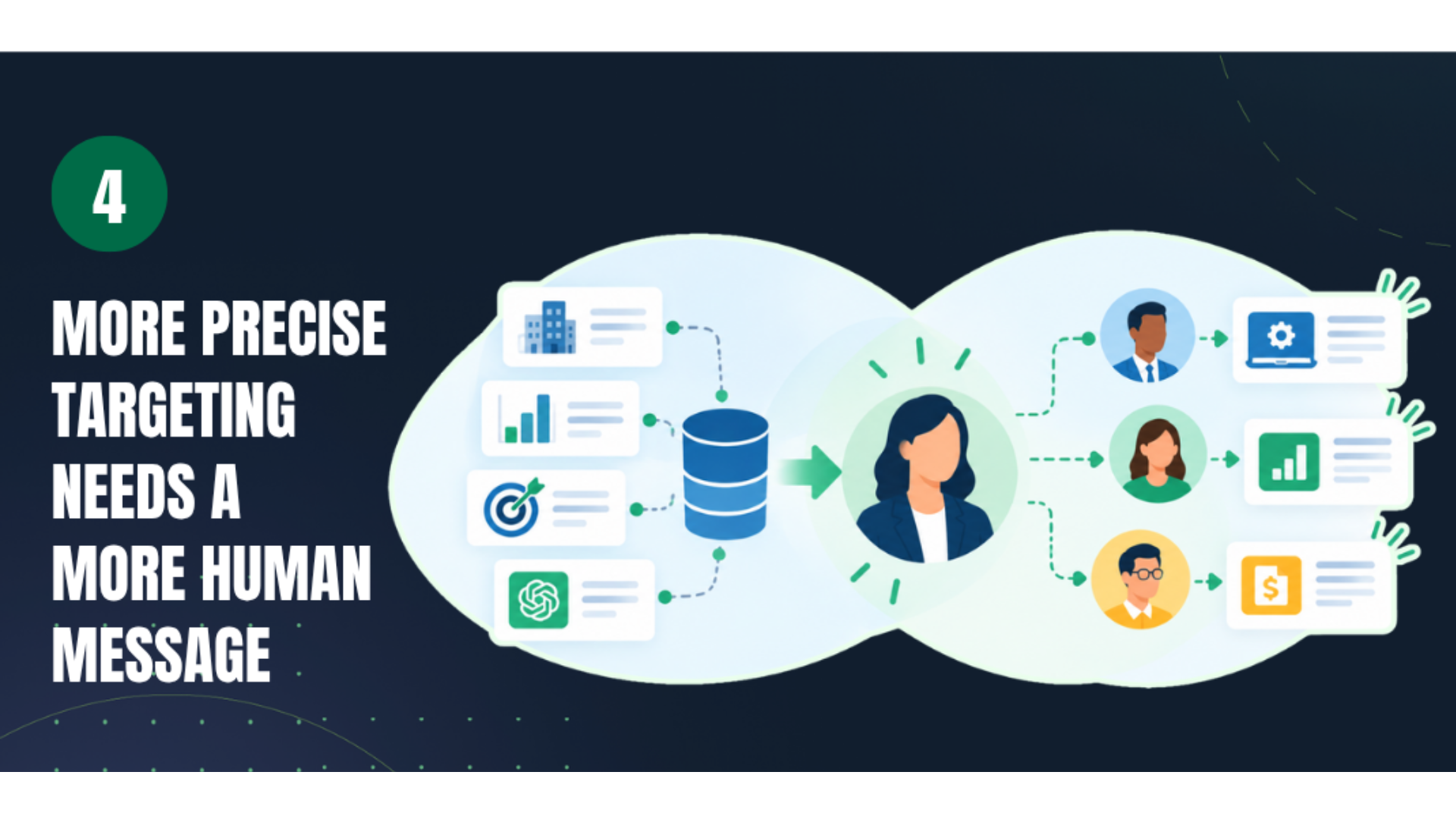
AI-assisted segmentation, intent signals, account insights, and role-based targeting can help teams identify relevant companies and better understand the people involved in a purchase.
But better targeting doesn’t automatically create better marketing.
Reaching the right person with a generic message still leaves plenty of opportunity on the table.
Understand the person, not just the account
B2B purchases often involve stakeholders with different responsibilities. An IT leader may focus on security, integration, and implementation. A finance stakeholder may care more about cost, efficiency, and return on investment.
Even when they’re considering the same solution, they need different information.
Intent signals and engagement data can provide clues about what an account is researching, but those signals need context. Someone reading about a technology category might be planning a future project, comparing options for an active purchase, or simply learning about a trend.
Research activity doesn’t automatically mean someone’s ready to buy.
Make personalization useful
AI can help marketers organize account insights, identify relevant topics, and adapt content for different audiences. The opportunity is to use that intelligence to make communication more helpful, not simply more frequent.
Instead of sending the same product-focused message to every stakeholder, tailor your approach around the problems each person is trying to solve.
An IT leader might need technical guidance on integration, while a finance leader may respond better to a practical explanation of costs and expected outcomes. That doesn’t require a separate campaign for every contact. It requires an understanding of the buying group and messaging that respects each person’s priorities.
Several marketers at the event described using AI tools and custom automations to support content personalization: not just email writing, but the actual creation and sharing of customized eBooks, landing pages, and other assets for key accounts and high priority leads.
One marketer shared that “We’re now using buyer intent data and account intelligence from our partners to help customize landing pages for our top ABM accounts to ensure they speak to the pain points they’re reporting and where they seem to be in the buying journey. It’s become a very efficient and effective process, and we’ve gotten really positive feedback from our Sales team.”
Technology can help marketers get more precise about who they’re reaching. But it’s the relevance, timeliness, and human element that turn those interactions into new sales meetings.
What should change in your 2027 marketing plan?
The conversations at the Music City Demand Gen Summit highlighted how connected these four shifts have become.
Brand authority helps buyers recognize and trust a company. A strong presence across journalistic media sites, product review platforms, and new media channels makes that expertise easier to discover. AI-powered search adds another layer to how buyers find and evaluate solutions. And better audience intelligence creates opportunities for more relevant, personalized engagement.
Each interaction can influence whether they see your company as relevant and worth considering.
As you build your 2027 strategy, ask yourself these questions:
- Brand authority: Are we building trust before buyers are ready to convert?
- Information ecosystem: Are we leveraging the right sources and channels to influence our target buying groups?
- AI visibility: Are buyers finding accurate information and are we being recommended in key AI answers?
- Human relevance: Are we using buyer intelligence to deliver more impactful messages or just more outreach?
The opportunity for 2027 isn’t necessarily to launch more campaigns or adopt every emerging tool.
It’s to make better decisions about where your brand appears, how it earns credibility, and how buyers experience your brand when they engage across the new information ecosystem.
Helpful takeaway resources
We’ve poured our marketing hearts and souls into the helpful resources below to support your planning process, whether that’s building your next campaign strategy or your annual marketing plan. Grab your own copies, share them around your team, and try to keep up get one step ahead of your buyers and competitors:
- Scroll Stopping B2B Marketing – How to create and distribute credible thought leadership that truly influences markets; complete with six real-world examples of inspirational B2B content campaigns delivered across TechnologyAdvice’s network.
- AI Visibility Handbook for B2B Marketing Teams – How AI search is impacting the B2B buying journey, which types of information sources LLMs are relying on, and what it means to take a more holistic approach to your AI visibility strategy.
- Tuning Your Demand Gen for the New Buying Journey – Keynote session from the Music City Demand Gen Summit that explored the themes discussed in this article while sharing examples of best-in-class modern marketing and how TechnologyAdvice is helping its customers reach audiences across New Media, Creators, Journalism, Reviews, and AI Search.